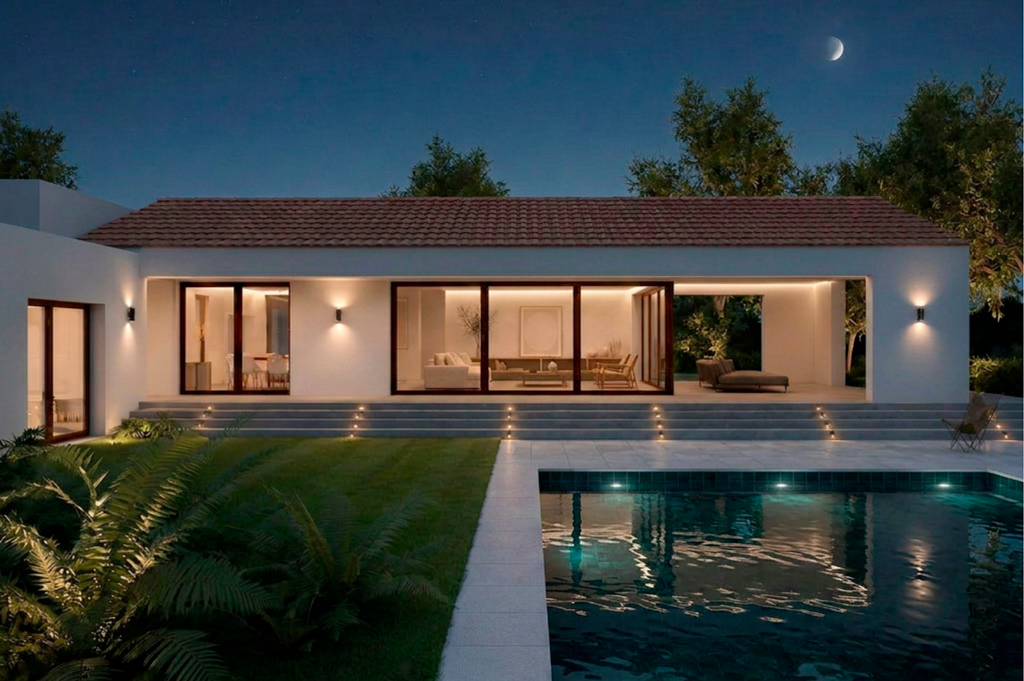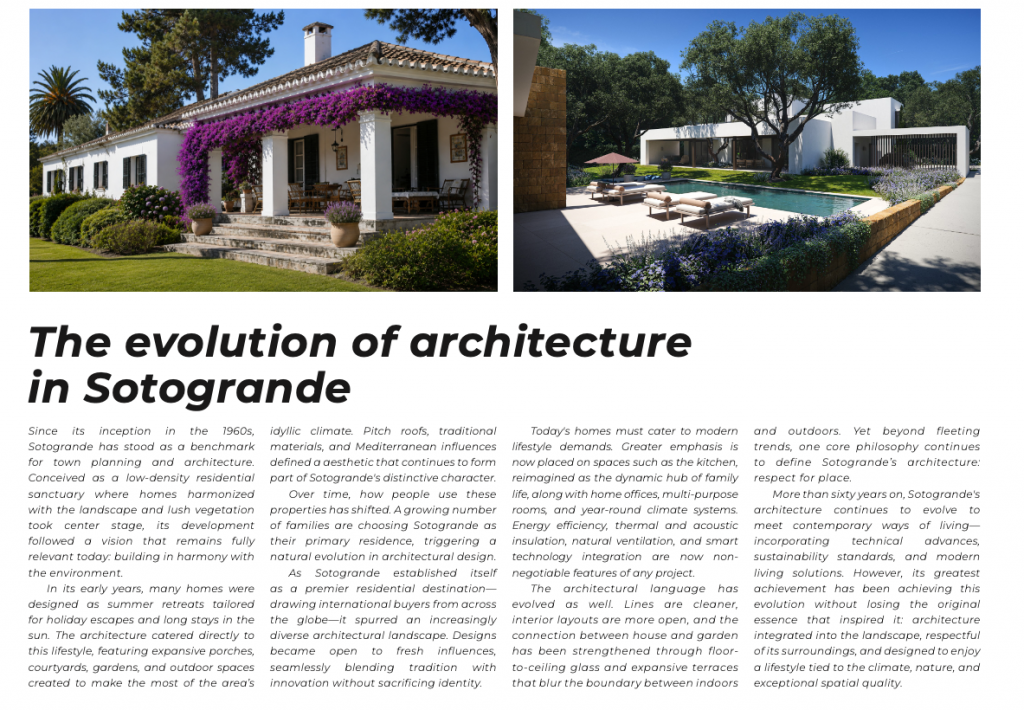
In Sotogrande, residential architecture almost always conjures images of expansive terraces, shaded porches, swimming pools, and lush gardens. Our climate invites us to live outdoors for much of the year, and many design decisions naturally revolve around connecting the home to its surrounding landscape. Yet there is another season that deserves just as much architectural forethought: winter.
When the cooler months arrive, the way we inhabit our homes shifts. Terraces take a back seat, gatherings move indoors to the living room, and we rediscover the quiet pleasure of interior spaces. It is during this time of year that certain architectural features—ones that go largely unnoticed through the summer—suddenly take center stage.
Foremost among them is the fireplace. For generations, it has been one of the defining hallmarks of traditional homes, anchoring living rooms and family spaces. Today, it continues to play a starring role, even as its form and function have evolved dramatically.
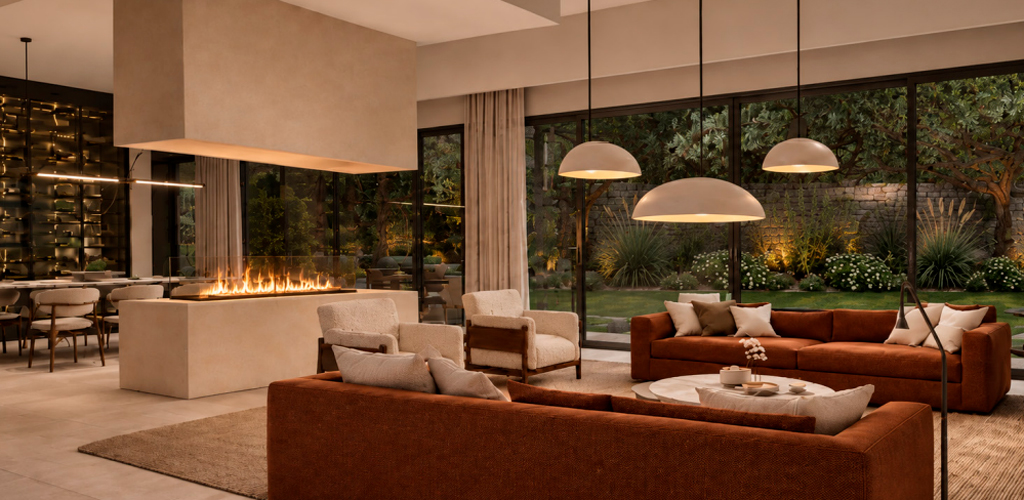
From the grand stone hearths of classic villas to sleek, contemporary designs—flush-mounted into walls or conceived as freestanding sculptural pieces—the fireplace remains the natural gathering point of the home. Beyond simply radiating warmth, it introduces something nearly impossible to replicate: the living presence of fire, its flicker, and the unmistakable atmosphere it creates.
In modern architecture, integrating a fireplace requires careful consideration of placement, scale, ventilation, and how it interacts with the surrounding furniture. A thoughtfully positioned hearth can anchor an entire living area, subtly zone open-plan layouts, or create a visual thread connecting multiple rooms.
Designing with winter in mind also means paying close attention to the subtler details—maximizing natural light, orienting living areas to capture the low winter sun, and framing views of the garden from inside to foster a deep sense of warmth and shelter.
And behind all of this lies the engineering required to ensure effortless comfort. High-efficiency climate control, superior thermal insulation, and performance glazing allow today’s homes to maintain an ideal indoor temperature without sacrificing the sweeping, glass-walled open spaces that define so much of Sotogrande’s architectural identity.
A truly well-designed home must respond to every season, adapting seamlessly to the changing ways we live in it throughout the year.
Because while Sotogrande may be famous for its summers, winter here holds a quiet magic all its own: crisp, sunlit days, unhurried afternoons, and the simple luxury of gathering around a fire while, just beyond the glass, the garden remains an integral part of home.
Article previous published in SGPLUS magazine.