In Sotogrande, golf has never been merely a sport. It is an integral part of the landscape, a way of socializing, and a framework for leisure. This profound connection to the environment is now being translated more clearly than ever into residential architecture. Beyond homes simply oriented toward a golf course, new projects are emerging that are specifically conceived for owners whose lifestyle revolves around the game. Architecture is no longer limited to capitalizing on views or proximity to the green; it is beginning to integrate golf as a natural component of the home’s spatial experience.
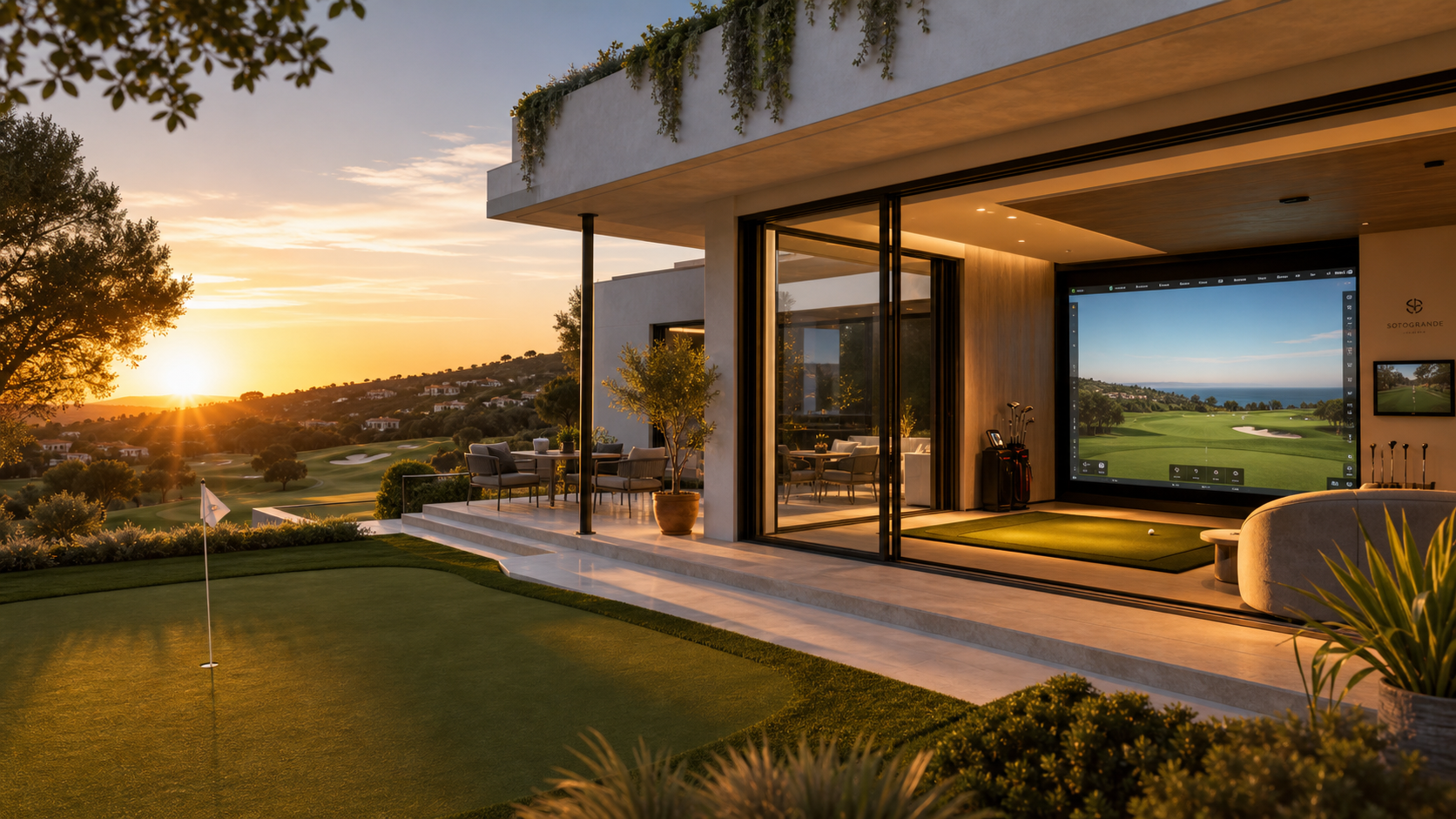
One of the most compelling examples is the integration of indoor golf simulators. These systems are capable of analyzing a swing with pinpoint precision, allowing residents to play virtually on some of the world’s most prestigious courses without leaving home. Spaces that were previously relegated to simple utility rooms are now being integrated into wellness or spa areas, blending sport, leisure, and relaxation into a single residential experience.
From an architectural standpoint, the challenge lies not only in incorporating technology but in doing so without disrupting the home’s spatial coherence. The key is designing flexible spaces capable of functioning as a sports zone, a social area, or an entertainment hub.
It is also increasingly common for landscaping to engage in a direct dialogue with golf. Small putting greens integrated into gardens—or even on rooftops—allow specific areas of the home to be transformed into spaces for leisure and practice. On some plots, rooftops are being converted into authentic golf-related terraces, combining vistas, greenery, and play areas within a unified architectural vision.
Even traditionally secondary spaces, such as the garage, are taking on new significance. Many homes now feature dedicated golf buggy areas, complete with charging points, direct access to the course, and annexes designed for the storage and organization of sporting equipment.
Ultimately, great architecture is not just about building beautiful spaces; it is about understanding habits and ways of living. In places like Sotogrande, where golf is woven into the identity of the surroundings, that relationship between architecture and lifestyle is becoming more evident every day